A story out of WNYC this morning highlights the emergence of worker cooperatives. Within these businesses, member-owners participate in democratic-style decisions that gives workers greater control over business decisions that directly effect them. According to the US Federation of Worker Cooperatives, cooperative businesses “provide better working conditions and wages for typically low-wage work, and increase household wealth for low-income workers.” The New York City Network of Worker Cooperatives has a listing of 40 cooperatives in the New York City area, ranging from webdesign and production to food services, clothing shops, bookkeeping to law services.
Don’t let the heat get you down! Here’s a listing of job fairs and career-related events happening in New York City throughout the month of July:
Upcoming Fairs/Workshops/Events*:
July 9, 2014 6:00-7:30p—Resume and “Pitch” Intensive @ the New York Public Library, Science, Industry and Business Library 188 Madison Ave @ 34th St, NYC.
July 17, 2014 6:30-9:00p—Turn to Tech with the Homebrew Software Engineer Job Far @ 184 5th Ave, 4th fl, NYC
July 17, 2014 12:30p-2:00p—Critique Your Resume @ the New York Public Library, Science, Industry and Business Library 188 Madison Ave @ 34th St, NYC. You must pre-register for this event.
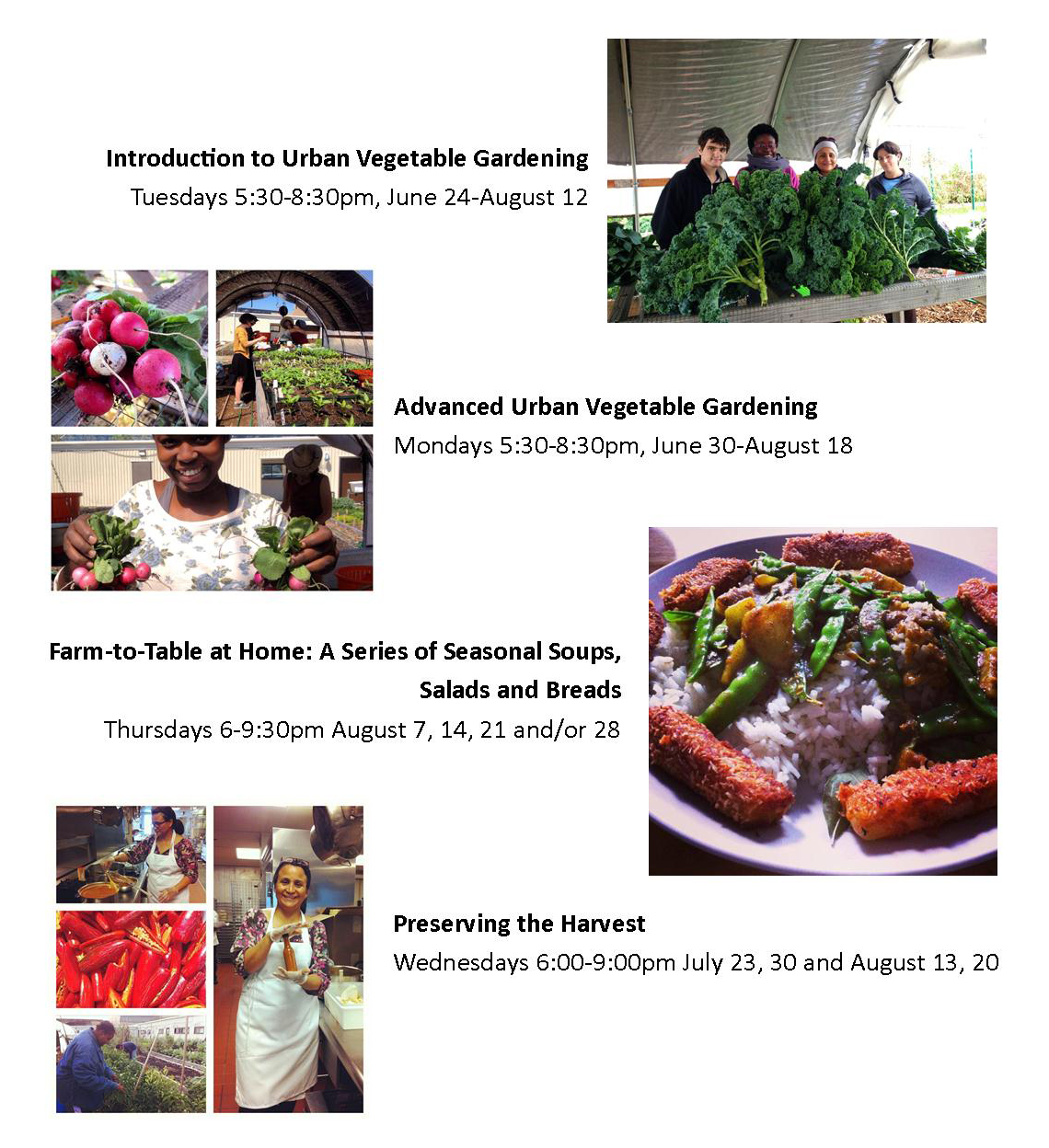
Kingsborough students, get freevegetables today! Visit KCC Urban Farm between 11am-2pm (while supplies last) to get bunches of kale, fennel, collards, lettuce and so much more! If you can’t make it today, we’ll be back on the farm on July 10th distributing more produce. Mark your calendars!
Note: this distribution is open to KCC students, only. If you’re not currently a student, sign up for one of our summer classes or check in for future Continuing Education classes that are held year round.
Whether it’s for you or your employees, Food Service Upgrade will prepare you for the National Servsafe and NYC Department of Health and Mental Hygiene Food Protection Certification Exams. This class is part of Northeast Resiliency Consortium programming that trains workers who play critical roles during times of crisis. Call us today to sign up!
At KCC Urban Farm, we farm using organic growing practices. In organic agricultural systems, diversity is the key to a farm’s balanced ecosystem—and key to healthy, nutrient-dense yields. In place of using synthetic pesticides, herbicides and chemical fertilizers, we rely on a variety of soil microbes, insects, plants, animals, weather conditions and farmers to keep our farm growing.
The images in this collection serve to reveal the wide array of activities and life on KCC Urban Farm. From images of microbes to photos of sowing seeds, harvesting crops, turning compost piles, insect eggs and more, these images represent the diversity and cycles of life that define organic agriculture.
Five varieties of greens
Volunteers preparing seed bed
KCC Urban Farm beets
Spring at KCC Urban Farm
Volunteer clears bed for new planting
Rainbow of cherry tomatoes
Urban Farming class
March early seed planting
Volunteers compost food scraps
Harvest time
KCC Urban Farm cucumbers
KCC CUlinary Arts class spinach harvest
KCC Urban Farm crew members
Morning harvest
KCC Urban Farm carrots
Flowers to attract beneficial inscets
Harlequin bugs
KCC Urban Farm early summer
Jalapeno peppers for bottled hot sauce
Crew member sowing seeds
Preparing salad greens for KCC Food Pantry donation
A report from New York City Comptroller, Scott Stringer, talks about the growing need for, and use of, flexible work arrangements (FWAs) that create alternatives to the traditional 9-to-5 work schedule. Families and Flexibility: Reshaping the Workplace for the 21st Century explains how changing workforce demographics (women who both work and take on the majority of childcare responsibilities, low-wage workers who have less control over their schedules, single-parent workers, workers who care for elderly/disabled family members, etc.) have highlighted the increased need of FWAs. In addition to providing examples of successful work-day restructuring at corporate offices (Aetna saved $78 million in real estate costs in 2012 by introducing FWA), the report also highlights unintended benefits including increased employee satisfaction and morale, and a reduction in overall employee stress/fatigue. You can read the full report here:
As the Northeast Resiliency Consortium begins its roll-out, we’ve made it a point to stay on top of infrastructure and systems developed by NYC to help local residents in the wake of future natural disasters. Earlier this year the New York City Office of Emergency Management unveiled the NYC’s post-disaster housing prototype. The structure includes 3 units (2 3-bedroom units and 1 1-bedroom unit) that each have a kitchen, living space, bathroom, storage space and even a balcony! What’s great is that these units have been created so that they can be assembled on site, allowing residents to stay in their communities and not rebuild too quickly (especially helpful in densely urban areas like NYC when development processes change in the wake of natural disasters). A unit has been constructed in Brooklyn Heights and will be on public display within the next few weeks. Take a look at this timelapse of a one being constructed:
New York State now offers the TASC Test Assessing Secondary CompletionTm, instead of the GED, but it’s worth seeing how all exams compare. Take a look at this great infographic from TASC comparing the three:
Project Rise is a CEWD initiative at Kingsborough that provides educational, internship and employment services to young adults. We prepare participants for the GED®/TASC exam, supports the development of work readiness skills and provides opportunities for participants to acquire gainful employment.
Interested? Here’s an updated snapshot of Project Rise at Kingsborough: